Equilibrium: In the beginning there is couple who are engaged and planning their wedding.
Disruption: The man is called to duty for another tour at war so he has to leave fiancee.
Disruption 2: The man goes missing while at war.
Recognition of the disruption: The army call the woman to tell her the man is missing in action and is unlikely to be alive.
Attempt to repair damage: The man is actually alive and tries to make it back to the woman however the woman is being persuaded to move on.
New equilibrium: The man makes it back to find his fiancee has moved on, he decides that it is best she doesn't know he is still live.
Thursday, 5 February 2015

Saul bass title sequence designer
Saul bass from leannacatherina
We looked at the graphic designer Saul bass who had created title sequences for films.
Saul bass studied design and the art students league in manhattan, he took up apprenticeships with firms in design and also done freelance work. His work was generally posters which used simple shapes that had symbolic meaning this is usually one image that stands out.
After creating a poster for a film director named Otto Preminger, he was invited to make the title sequence for the film. This was Saul bass's big break and this lead him to create title sequences for many other films such as 'Goodfellas', 'Cape fear', 'psycho' by Alfred Hitchcock and more.
We looked at the graphic designer Saul bass who had created title sequences for films.
Saul bass studied design and the art students league in manhattan, he took up apprenticeships with firms in design and also done freelance work. His work was generally posters which used simple shapes that had symbolic meaning this is usually one image that stands out.
After creating a poster for a film director named Otto Preminger, he was invited to make the title sequence for the film. This was Saul bass's big break and this lead him to create title sequences for many other films such as 'Goodfellas', 'Cape fear', 'psycho' by Alfred Hitchcock and more.
First pitch feedback
Feedback from the class


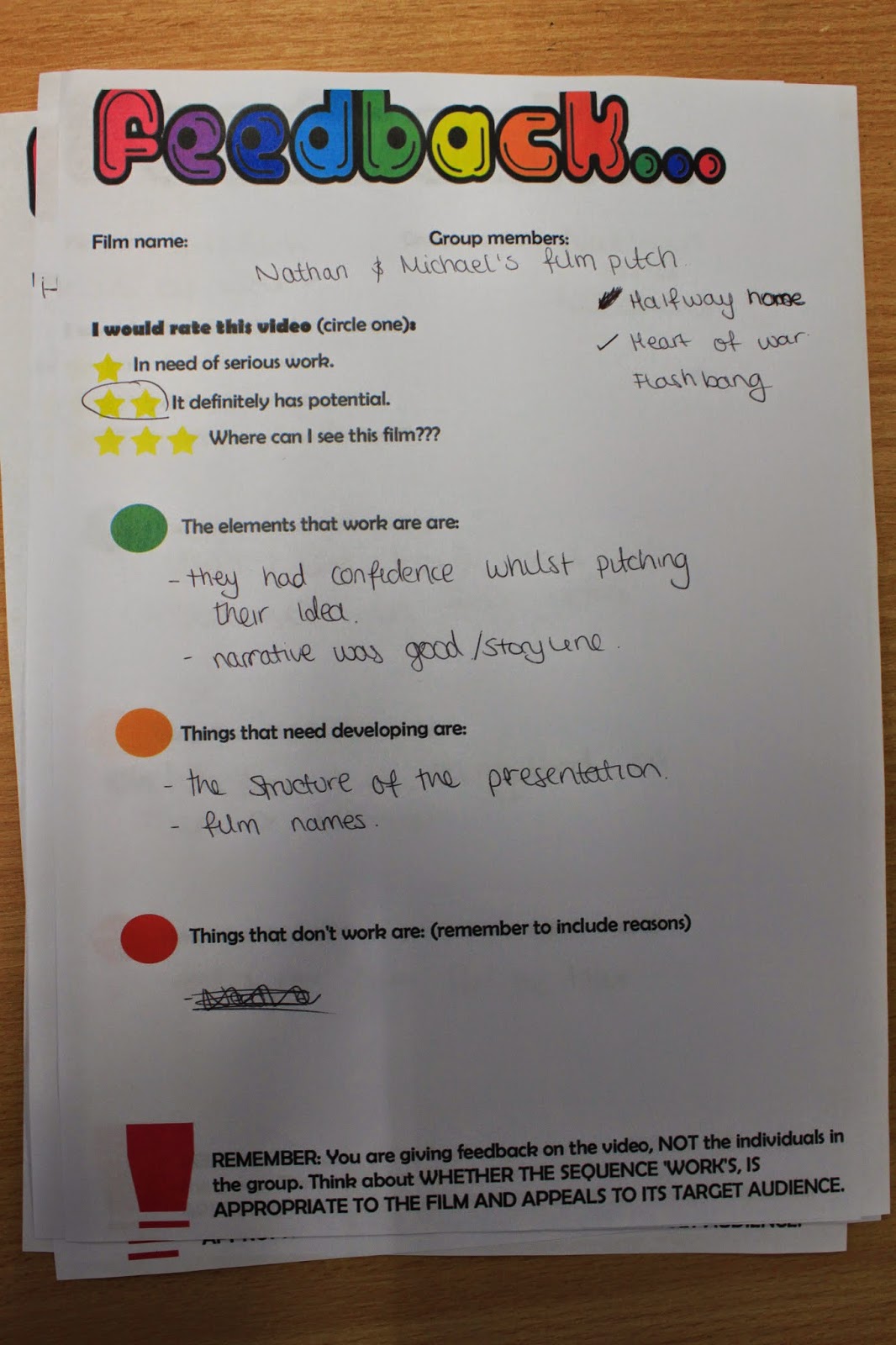


Our feedback is generally positive, people liked the title 'heart of war' however we have discovered a film with this title to we will consider other names. The choice of actors was good people thought they would suit the roles we had chosen for them the budget was also well approved by most.
From the feedback it was suggested we state who the primary target audience and any secondary audiences. The timing of release has to be changed as the next star wars film will be released around the same time making our film less successful at box office. We also need to think more about the ending of the film as that was not made clear in the pitch.


Thursday, 15 January 2015
zombieland title sequence analysis
Setting
From the title sequence the audience can see that the film is set in modern day America during a apocalypse outbreak. The title sequence shows this through mise en scene throughout, the first scene is set at an American style prison which consists of towers and barbed wire fencing stating it's in America. Chaos is shown by a prisoner in an orange jumpsuit throwing a man in uniform off of the tower suggesting that there is a loss of organised society in the film. The zombies in the title sequence tells the audience it is set in a apocalypse, in the scenes there is a consistently higher ratio of zombies to humans showing there is an outbreak.


Theme
The title presents the film as horror , zombie and comedy this is shown as there is a three legged race which zombies are involved in and there is a zombie stripper running which is black comedy because you would not expect to see zombies doing these kind of things.


Iconography
During the title sequence we see key elements that tell us it is a zombie film there are mutilated people covered in blood chasing normal people this is something you would expect from a film based on a zombie apocalypse.

Narrative
The title sequence has no narrative it only shows what is happening at the time to show us there is a zombie out break.
Characters
The title sequence does not show the audience who the main characters are.
Style
Thursday, 8 January 2015
coursework title sequence
Today we began to look at producing a title sequence this included discussing what a title sequence is, why they are important and applying STINCS to a title sequence.
STINCS is an acronym which stands for:
STINCS is an acronym which stands for:
Setting - Time and place
Theme - Genere of the film
Iconography - Things that are relevant to the genre
Narrative - What the story is about
Characters - a person in the story
Style - cinematography, sound, editing and mise en scene
Subscribe to:
Posts (Atom)